
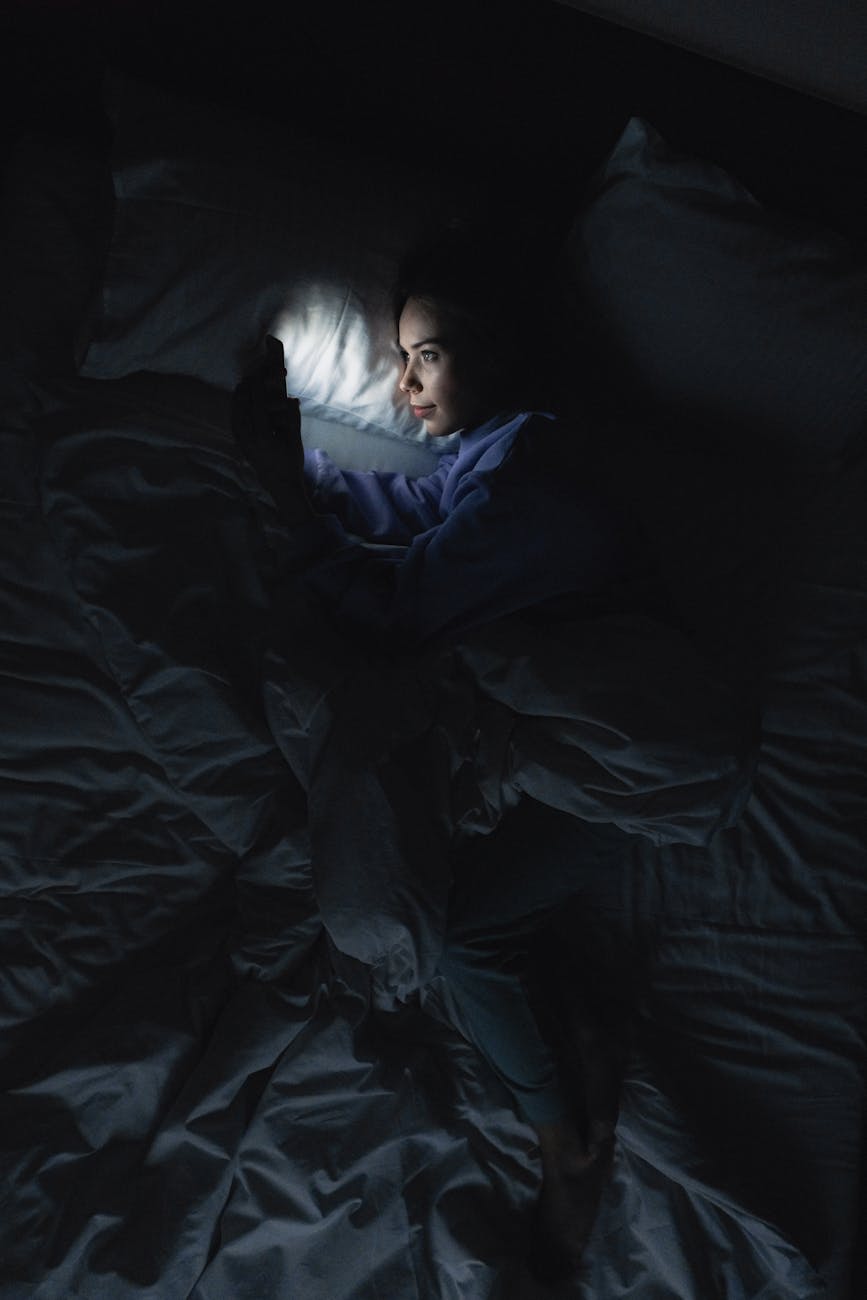
Have you ever had one of those nights where you’re so tired but just can’t fall asleep? You flip around, can’t stop moving, or keep flipping your pillow to the cold side. A few months ago, I had this issue and couldn’t figure out the real reason. It turns out that the real reason is blue light. Blue light comes from many things like the sun or more commonly used screens. Before going to bed, I would always watch something on Netflix or scroll through social media to relax before bed. But it turns out that the blue light emitted from screens disrupts sleep patterns and can also damage your health.
What is Blue Light?
Blue Light is a color in the Visible Light Spectrum. Blue Light wavelengths are short wavelengths meaning that these wavelengths emit higher energy. When we use blue light during the day there are several benefits like how it regulates your circadian rhythm, boosts your reaction times, and even improves your mood. But when we use blue light too much, our eyes get strained and have trouble to filter the blue light and more radiation can pass from the eye to the retina, which in result can lead to health problems.
The Major Risks of Blue Light
Effects on Sleep: When we use blue light right before bed it suppresses the hormone melatonin, which is the hormone responsible for making us tired and sleepy. Using too much blue light before bed can result in many negative effects.
For example, it impacts our circadian rhythms (the bodies clock), it causes trouble sleeping and may cause you to wake up during the night, and it can also cause severe health disorders like cancer and diabetes, which can lead to increased stress and anxiety.
Effects on Eyes: Screen Time usage has been increased by 8.4% from 2013. The average for screen time currently is 6 hours and 40 minutes, and it is continuing to grow. Screen Time can lead to many detrimental effects on the eyes.
Many of the symptoms include, eye strain, dry eyes, headaches, and blurry eyes. According to El Pais Health, the planet’s vision is getting worse and by 2050, 50% of the population will suffer from myopia or more commonly referred to as nearsightedness, which is trouble seeing from far distances.
Long Term Impacts: Overtime, blue light will take over humans health and lead to many negative effects. Using blue light over long periods of time can lead to shortened life-span, can cause damage to eye retina and also can cause chronic eye disorders, severe headaches as well as painful migraines.
Blue Light and the Mental Health Effects
Exposure towards blue light can harm your brain, because using it excessively can lead to disrupted sleep schedule which can lead to loss of memory. For example, forgetting what you learned in your math class yesterday. Excessive use can also make it hard to learn. Be Blue light can cause disrupted sleep which can be harmful to the body, and mess with hormones that control hunger, which can lead to obesity.
Limiting The Exposure
Blue Light is now a big problem in the current world, and you can’t stop blue light because it’s almost everywhere, but one thing you can do is limit it. Some things to do are:
1 – Screen Time: Limit the usage of screen time you use per day. A healthy amount for a person is 2 hours. 2 – Reduce Brightness: Dim the brightness of your phone when using your screens to help reduce the light exposure. 3 – Dim Red Lights for Night: Using dim red lights does the exact opposite of suppressing melatonin and disrupting your circadian rhythm. It actually helps to improve sleep, increase the production of melatonin, and it can also help to improve your vision. 4 – Avoid Screens 2-3 Hours Before Bed: Avoiding screens before bed reduces your exposure to blue light, and doing this can lead to better quality sleep. 5 – Use Blue Light Glasses: Using Blue Light glasses can help prevent exposure emitted from screens
Cited Sources:
https://www.health.harvard.edu/staying-healthy/blue-light-has-a-dark-side
https://www.eyesafe.com/bluelight/
https://www.webmd.com/eye-health/blue-light-reduce-effects\
https://www.healthline.com/health/what-is-blue-light

 The Golden Thread
Leave a comment