
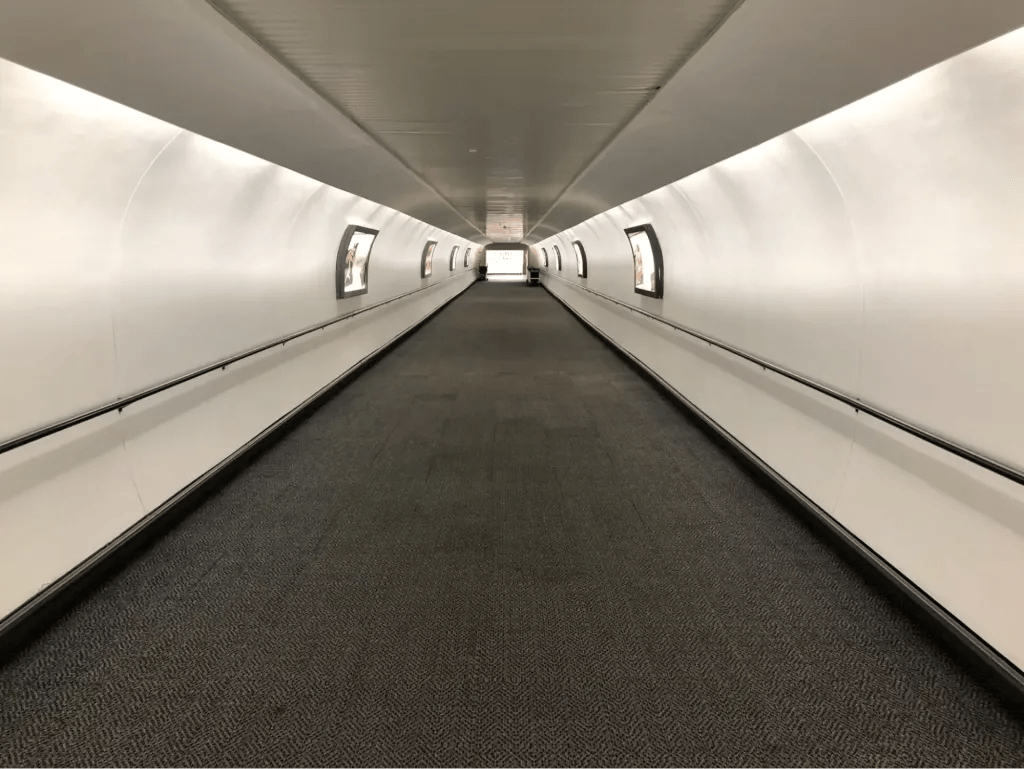
In my last blog, I talked about liminal spaces in an internet aesthetic type of way, like how a lot of people see it, such as spaces that don’t have anyone or that give you the feeling of liminality. While the big boom of liminal spaces during the pandemic of 2020 gave it the popular meaning it has today, it has less popular meanings that are just as important. Liminal spaces aren’t just the aesthetic part of the internet, it is everywhere in our lives, including buildings and such.
People in architecture have always used the word liminal spaces. In simple terms, it is just a space between two functional spaces, such as a doorway. Architects had these terms for a long time and also defined them in theories that explained the role of liminal spaces in our culture.

Where can I find them?
Transitional spaces are found basically everywhere in the world. As I said in the beginning of the blog, they are just spaces between two other functional spaces; a space that connects two spaces. There are many places and things that are a good example of the concept of liminal spaces. Corridors, stairways, elevators, and even your front porch. Take, for example, the front porch. It transitions you from the outside into going inside your house, so it counts as an example of the space.
Liminal spaces must serve as a way to smoothen or blur the boundary between two spaces. So, in architecture, they are places of commute like roads and sidewalks and not places that are your final destination. They are spaces of becoming and not being. That is often why many people connect with them because we all seem to have the same experience with these types of spaces. Perhaps because we’ve all been on roads or hallways before, it creates a sense of community within us and therefore a sense of belonging.
How come they all feel the same?
Have you ever wondered why most of these liminal space images feel the same? That it lacks it’s own identity or that thing to make it unique? It is because they are all transitional spaces as I’ve said before. Almost everywhere in the world has them, as in hallways and corridors. They are all generic but that is what makes them what they are. They are universal in the way of architecture. Every example of long hallways and shopping malls have large universal capabilities. That is why many images of liminal spaces invoke those same feelings because you’ve been to places that are highly similar.
The big TL:DR of this whole blog is that #1: liminal spaces are not limited to just the internet aesthetic aspect and has a different architectural meaning. #2: They are found just about everywhere, in hallways and corridors and such. Universal and generic architecture makes all of the prior examples feel that way. #3 The reason you feel a connection to those liminal space images you find everywhere on the web is because you’ve been to many places that are just like that because of the universal and generic architecture.

 The Golden Thread
Leave a comment