
Space has always been an interest of mine. It is always there when I look up into the night sky. I love looking up at the beautiful stars that are burning millions of miles away. My father and I have always had a connection over space and all of its wonders. The curiosity of space is something that we are blessed to share, but how did we come from cavemen to journeying to space, to landing on the moon?
It started a while before I was born. Around the time after World War II, people started looking to space for many reasons. There were also many factors that influenced the bigger nations of the world to race to space. Also, many countries were trying to find improvements to the quality of life.
What Started It?
It all started after World War II when many scientists were urging countries to start exploring space. During this time, the U.S. and the Soviet Union were at odds with each other. Thus, when a Soviet leader approved the launch of a satellite to show that communism was superior to open or free markets, targeting the U.S., John F. Kennedy did not like this and chose to start a space program that would be quick and efficient at getting a man to the Moon. This led to a heated figurative battle between the U.S. and the Soviet Union on who could put a man on the Moon first, which only expedited the time that it took them to accomplish this feat.
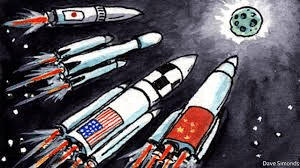
Through this time of tension between the two countries, the situation became very heated. Not only was the space race ongoing, but that was only a small part of the Cold War. Both countries started sending more and more satellites and such into outer space. Finally, in 1969, the United States government decided to send astronauts to the moon. Using the Apollo 11 space shuttle, where Buzz Aldrin and Neil Armstrong ventured into outer space to land on the moon. This event did slow down the drive to venture into outer space, but there was still more to do.
Major Events in Space
A huge part of the way we study and explore space is through the International Space Station (ISS). The beginning of the ISS started in the year 2000, but it was finally finished and had a crew on it in 2011. Since then, astronauts from all over the world have spent time up there and studied the mysteries of our solar system and beyond. Although the U.S. and the Soviet Union had their differences, they both have astronauts inhabiting the space station. The ISS allows us to have a lasting presence in space and continue to study space and learn from it.
Another major event in the world of space exploration is the landing of the Mars rovers. The purpose of the rovers Spirit and Opportunity was to analyze Mars along with figuring out some big questions, such as if there was water or life on the planet. Both of the rovers confirmed that at some point in time there was long-standing water on the planet. Spirit was the first rover, and it only journeyed for 4.8 miles, but Opportunity was much superior to it, traveling over 28 miles.
All in all, there have been countless events to happen in space. So many different factors playing into them—scientific, political, and many more. Space exploration still interests me, and I have so many questions about why we do it and how it helps us, but writing this blog helped me understand the history and many of the major events that led us to where our current state of space exploration is.

 The Golden Thread
Leave a comment