
As the curtain closed on the bloodiest war in world history, a vacuum was left in the space of the aviation development. Many believed that this was the final war the world would ever fight. What was the point in developing new fighters? Why should anyone need higher flying, faster, more manueverable planes?
Yet, this time in aviation was one of the most significant in history. It was the time when airplanes went from an experimental subject to a science. Wooden, fabric covered aircraft became streamlined, metal monocoque machines. Transcontinental flight became feasible, and records were broken at a breakneck pace.
Air Races: A Lightning-Fast Evolution
Although air races existed in primitive forms before the First World War, they really took off after the war ended. Aviation had a new sense of wonder and accomplishment in the public eye. In 1924, the National Aeronautic Association hosted an Air race with an $80,000 dollar prize. That’s almost $1.5 million dollars today! Over a hundred entries were made, even from international designers. However, the international entries pulled out under the notion that the American designs were superior. Nevertheless, the competition proved to be a massive attraction for the public. For the competition, “Excitement for the events rose greatly throughout Dayton with all public schools closing on Friday and all city and county offices closed through the weekend.” Even local factories shut down to allow workers to attend the event! These races gave widespread publicity to the world of flight, and inspired many subsequent pilots in general aviation and leading into the Second World War.
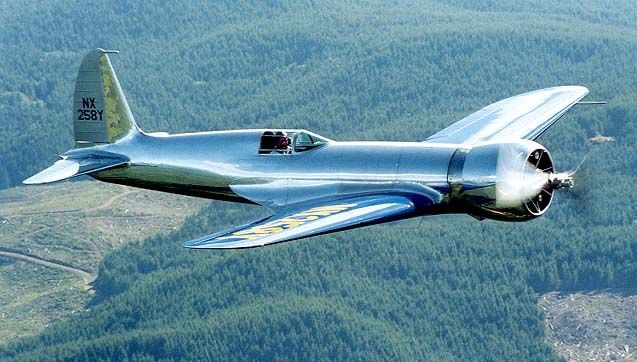
The races didn’t just catch the public eye, but also created a sort of arms race that caused rapid advancement in airplane technology. In a 1920 New York Race, a race aircraft won with a speed of just over one hundred fifty miles per hour. By 1935, the air speed record was broken by Howard Hughes in his Hughes H-1 Racer flying over three hundred fifty miles per hour. New technologies and designs were seeing breakthroughs yearly. Designers sought to exploit every available factor at their disposal for speed. Among these were new engine designs, weight reductions, and overall aerodynamic discoveries.
Civilian Airliners
Like air races, people were being flown for profits on a small scale before the First World War. These were very limited flights, purely for recreation and sightseeing. Businesses that took part in these ventures struggled. This was for one main reason: flying as a passenger wasn’t enjoyable. Even into the late 1920s, passengers did not have a pleasant experience flying for long periods. By then, it was still faster to ride a train across the United States than to fly. The same article expands on the discomfort of flight: “Airplanes had to fly around mountains, could not fly safely at night, and had to land frequently to refuel. Flying by air was uncomfortable and some passengers wore overalls, helmets, and goggles. The airplanes were uninsulated thin sheets of metal, rattling in the wind, and passengers stuck cotton in their ears to stop the noise.” Couple this with the slow speeds of aircraft at the time, and a transcontinental flight would have been days of torture.
It wasn’t until Lindbergh’s famous flight across the Atlantic that airline ventures improved. After that, there was a complete shift in the attitudes of investments towards commercial aviation. Money poured in, creating jobs and new opportunities for entrepreneurs. The 1930s truly realized commercial aviation. In 1933, the first true passenger plane was introduced. The Boeing 247 could seat more than ten passengers and featured a design still traditional in airliners today. It was all metal, had two engines, a low wing supported only by the fuselage, de-icing equipment, and an autopilot system.
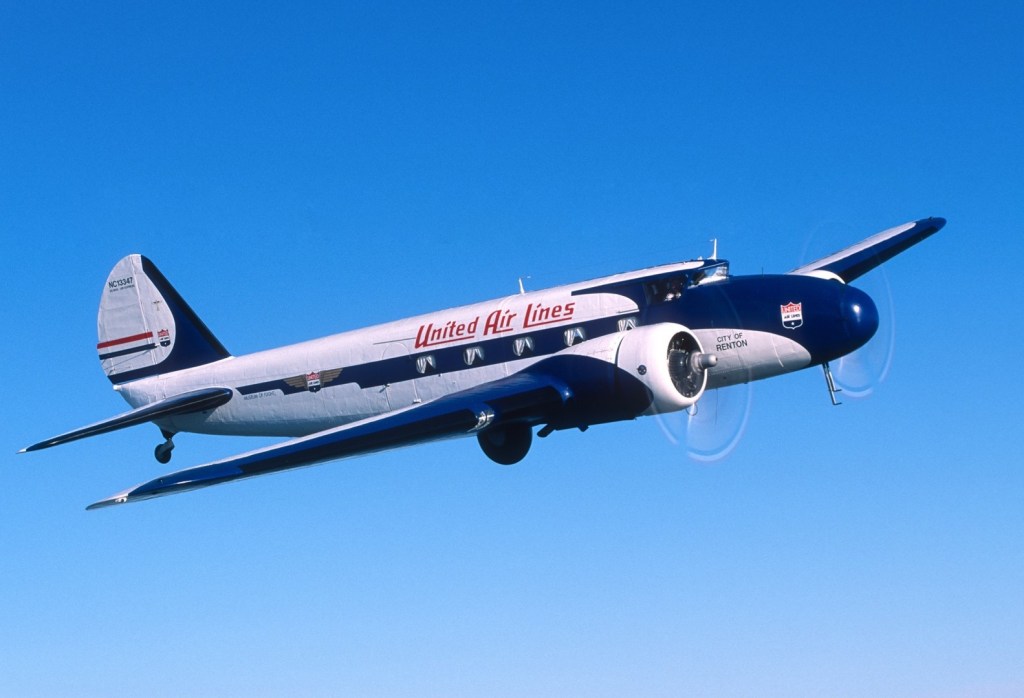
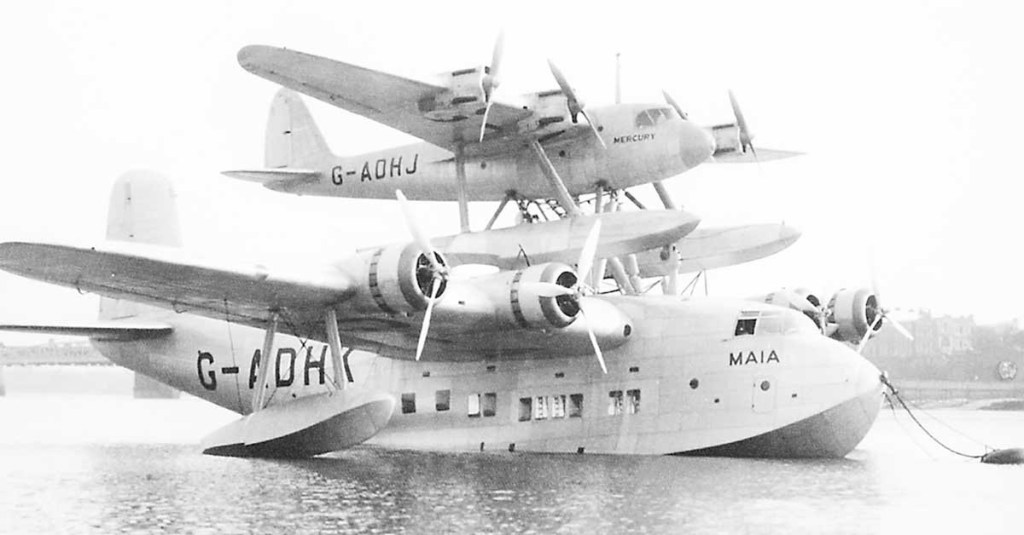
Naturally, this breakout aircraft spurred on other designers to compete in the growing market. Soon, similar designs such as the legendary DC-3 entered the scene. For long haul flights, massive flying boats were constructed, as such large aircraft needed to be supported by the water when not in flight. The Martin M-130, one such flying boat, was able to fly nonstop from Honolulu to San Francisco!
American Military Stagnation
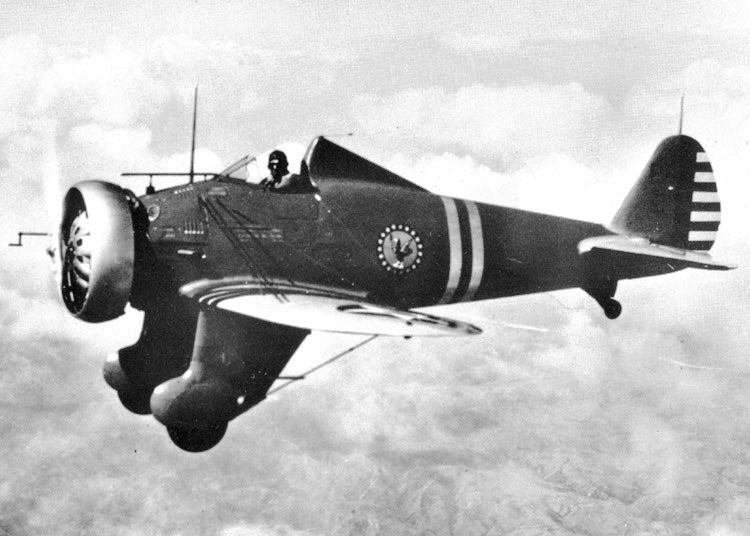
Opposed to the civilian world, the American military made much less growth during this time. A lack of wartime or preparatory reasons for development left projects underfunded. While the Army Air Corps did make evolutions, they were brought over more from the civilian market rather than vice versa.
A growing resentment of the stifling of aviation from the army led to increased push to make a change in the mid-to-late 1920s. The leader of this party was General Billy Mitchell, who was the deputy director of the Army Air Services. Mitchell was disillusioned with the Navy’s control of coastal aviation, and vehemently attacked the notion of an Army Air Service dedicated to purely supporting troops on the ground. He argued strongly that pilots should be autonomous and free thinking units on the battlefield. Ultimately, his protests resulted in a court martial, but his ideas were supported. Mitchell believed that a focus on air power would be the key to future wars. Looking ahead to WWII, he was correct. The Army Air Corps eventually caved to the pressure, and more dedication was allocated to aircraft design. By the late thirties, America still lacked sufficient fighters for the oncoming war, but had managed to create a handful of impressive bombers.
Nazi Germany’s Air Force Evolution: The Growing Monster
While the United States fell idle until the very end of the interwar period, Nazi Germany quickly caught up to, and surpassed, much of the world with its aeronautical developments. Granted, it is a myth to claim that Germany was superior in every form to its competitors such as Great Britain. However, it is impossible to deny the impressiveness that Nazi Germany showcased by militarizing in only a few short years and inventing technologies that were utilized to great extent after the war.
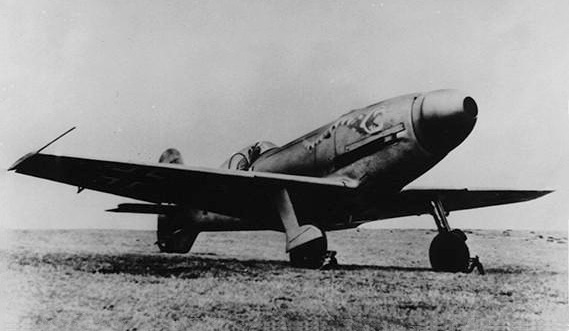
Not mentioned in the previous section on air races was Germany’s entries in airspeed records. On the twenty-ninth of April, 1939, months before the outbreak of WWII, Germany set an airspeed record of four hundred thirty-nine miles per hour using a Messerschmitt Bf 209. By this point, Nazi Germany’s illegal rearmament was no secret, and their fighter eclipsed the record set in 1935 by Hughes by well over one hundred miles per hour. This record stood as the fastest piston engine fighter speed until 1969.
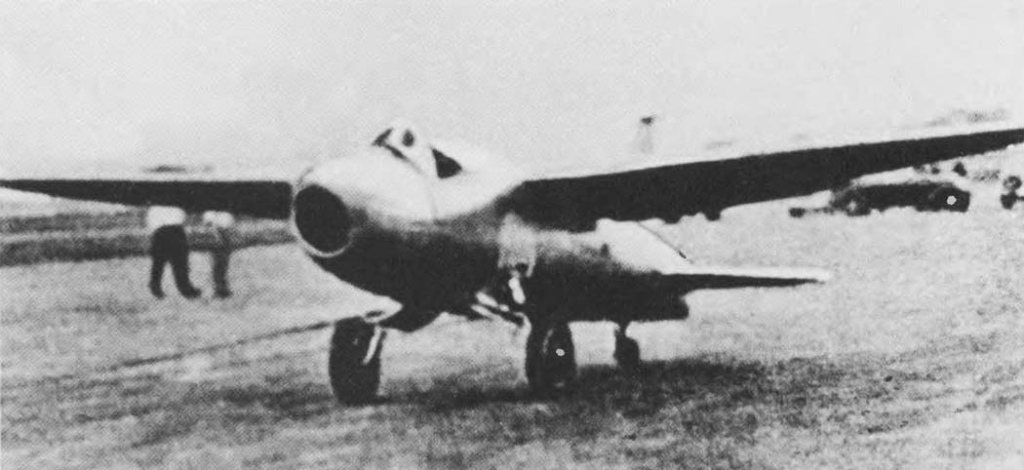
Weeks before the onset of the Second World War, a secret event took place in Germany. Without the authority of the Luftwaffe, engineer Hans von Ohain privately tested an aircraft known as the He 178. This aircraft took off for a short, six minute flight and had poor endurance and top speed. Nazi officials know attended the demonstration were disinterested. Yet, this plane was one of the most important ever built because it took to the sky without a propeller. Powered by a turbojet, the He 178 paved the way for the development of jet aircraft.
Nazi Germany was the antithesis to the American Army Air Corps during the Golden Age of Aviation. During the twenties, both services were underdeveloped in aircraft design. Germany was dealing with massive economic collapse and had strict regulations put in place to prevent the building of any air forces. The United States Army Air Corps was underfunded and choked by political schemes. It was only in the later years of the interwar period that the United States began to make progress, while Germany’s Nazi shift led to a rapid, vengeful race to create the most advanced machines of war possible.
Closing Thoughts
It is looking back at this era of history that we can examine the good and bad decisions that countries made. While America’s frustratingly slow evolution of military aviation was harmful in the earliest years of the war, it quickly rose to become the dominating air power across the globe. Without the early advancements in the civilian market during the 1920s and 1930s, this would not have been feasible. In contrast, Germany’s shocking militarization never won them the war, but did give spoils of technology to the victors that have impacted the world in indescribable ways. The Golden Age of Aviation was a time of unprecedented change in ways very different from modern day aviation. It was a time of awe and wonder, when aviation still seemed magical.

 The Golden Thread
Leave a comment