
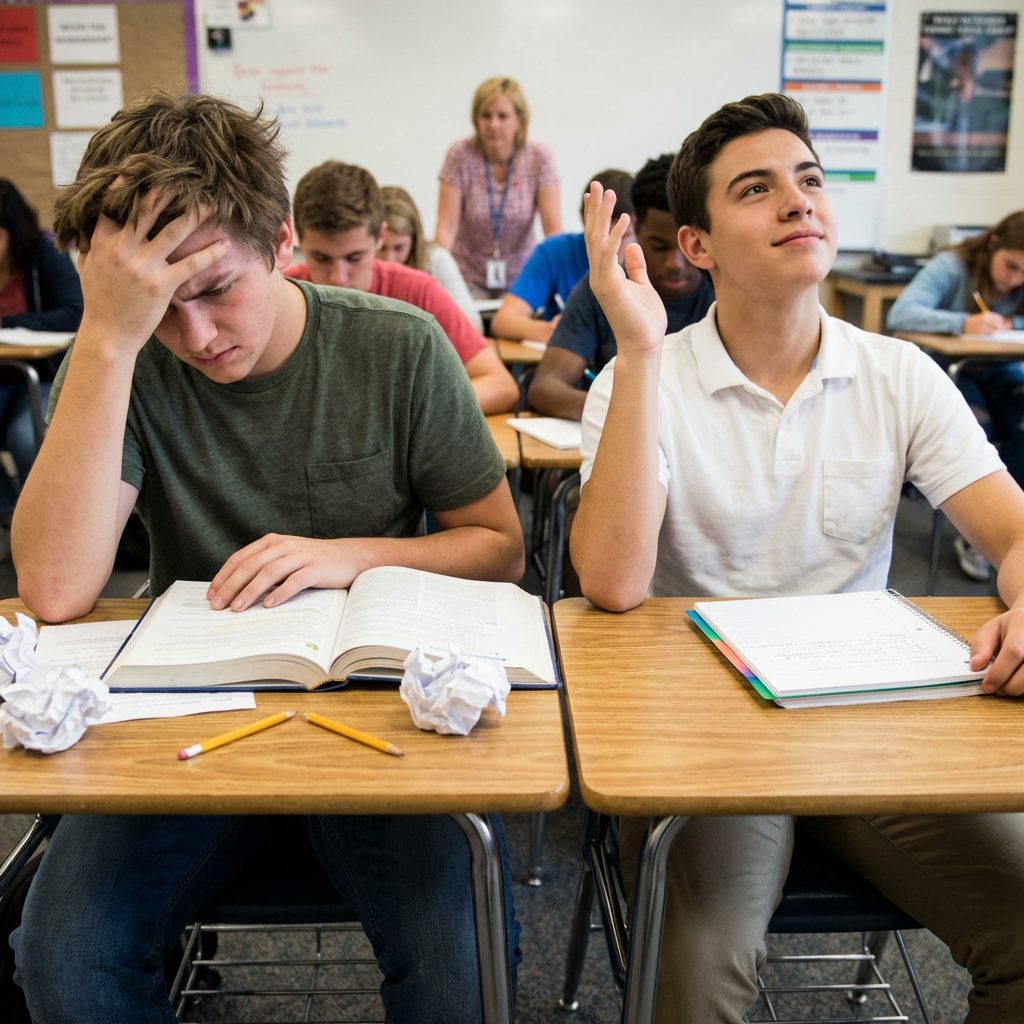
Throughout the years, students have been faced with one main challenge: stress and anxiety.
11:47 P.M.
At 11:47 p.m., two students sit at their desks staring at the same assignment. One keeps rereading the same sentence, distracted and overwhelmed. The other is working steadily, focused and calm. The difference between them is not intelligence. It’s habit. More specifically, it’s movement.
Students often treat exercise as if it has nothing to do with school. It feels optional, like something separate from grades and deadlines. But when you look closer, the mental gap between students who stay active and those who do not starts to show.
When Everything Starts to Feel Like Too Much
The first difference shows up in stress. Students who do not exercise tend to let it build up without noticing. Assignments pile up, expectations grow, and even small tasks start to feel overwhelming. On the other hand, students who exercise have a way to release that pressure. After moving around, their minds feel clearer. The stress does not disappear, but it becomes something they can handle.
I have noticed this in my own life too. On days when I skip the gym, everything feels heavier than it should, as if I didn’t hit the quota for the day. Even simple homework feels frustrating, for example, this blog, since I had to skip chest day of all days to make time to write. But after a workout, my mindset shifts. The same problems are still there, but they do not feel as overwhelming.

Trying to Work, But Getting Nowhere
Focus is another major difference. Without exercise, it is easy to get distracted. Phones become more tempting, motivation drops, and simple tasks take longer than they should. Students who stay active experience something different. After a workout, it becomes easier to sit down and actually focus.
I have had days where I could not concentrate at all, just switching between tabs and wasting time watching Mustang reviews on YouTube. But after working out, it feels like a reset. I can sit down, finish my work faster, and actually understand what I am doing.
Showing Up Anyway
Discipline is where the contrast becomes even more obvious. Students who do not exercise often rely on motivation, which comes and goes. Students who work out regularly learn consistency instead. They show up even when they do not feel like it.
That mindset carries into school. It makes it easier to stay organized, manage time, and push through work even when it is difficult. It is less about feeling motivated and more about just getting things done.
The Way You See Yourself Changes Too
Confidence is another clear difference. Inactive students can feel unsure of themselves, especially in stressful situations. In comparison, students who exercise regularly start to trust themselves more.
As I got more consistent with working out, I noticed I was less nervous in class and more willing to speak up. It was not just about physical progress. It was the feeling that I could handle challenges instead of avoiding them.
Somewhere to Put the Pressure
There is also a difference in how students handle emotions. Without an outlet, stress often gets bottled up or ignored. A lot of students turn to their phones or distractions instead of dealing with what they feel.
Exercise gives a healthier option. It allows students to clear their minds and come back feeling more balanced. It becomes a way to reset instead of escape.
Same Classroom, Different Experience
Two students can sit in the same classroom, learn the same material, and face the same expectations, but their experiences can be completely different. One feels stuck and overwhelmed. The other feels focused and in control.
The difference is not talent. It is not luck. It is something much simpler.
It is movement.

 The Golden Thread
Leave a comment