
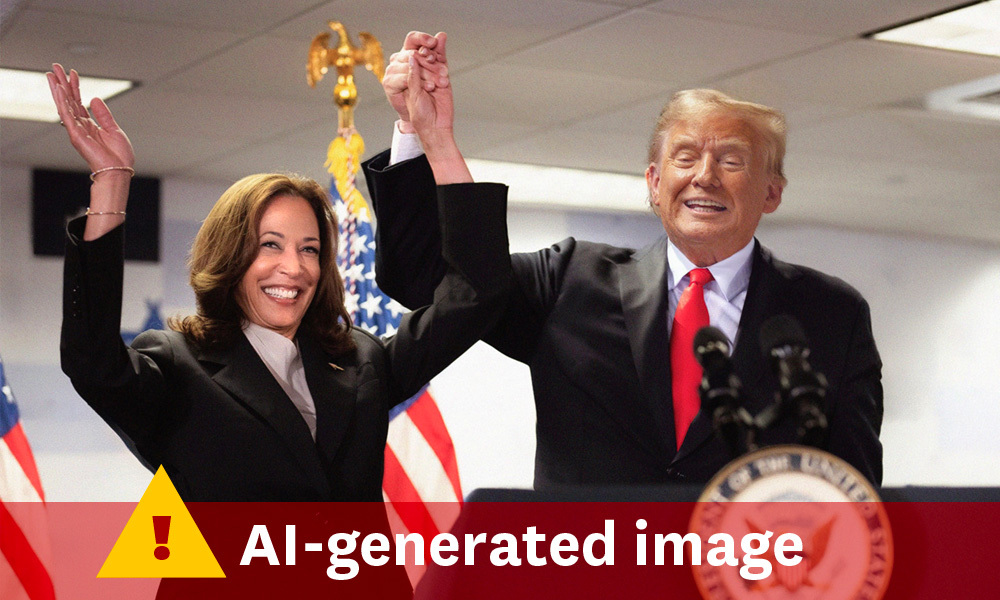
In today’s society, more and more AI images are popping up. The most notable generator rhyming with “Rock.”
Yes, Grok is taking the Political arena by storm. And rocks are tough. They stay around for a while. Withering away takes far too long. Just like how hard sediment stays way after the damage is done, so it seems will Grok’s images as well. Elon Musk seems to be trying to convince us all that his generator is being used for good, yet posts on his own platform (X) strange photos that may be the downfall of our society.
There’s a growing tension between journalism and digital sectors that is prevalent with the introduction of AI. Maybe this is rightful, because I don’t know many that would trust AI to have a significant influence in the news that get’s released to us on the daily. Highlighting contention is the fact that many people can’t tell the difference between AI photos and truly taken photos. This means that not many are in tune with the AI industry, so how many of us can reliably trust anything we see?
What is an AI image?
A written prompt describing a detailed (or not so detailed) scene is taken by AI. Step by step, the generator pieces together pixels from other content on the internet. Yes, other content. It should be widespread knowledge, but for some reason it doesn’t actually seem to be the case at the moment.
Almost all AI generation is taken from other sources, not created out of no where. This means most of what AI generator users are seeing is copyrighted or plagiarized, but I’ll get to that one later.
Using the word “realistic” might mean that AI can generate something indistinguishable. I consider this a powerful tool that could be used very wrong in some instances. And how do we know? Well I personally actively see it impact the young people I interact with in my daily life.
So how do A.I. images impact people (aka voters)?
In today’s world I think I have talked to about a million young voters about the election. Their answer is they don’t have enough information.
In my opinion, it’s not that they don’t have enough information, it’s that the information isn’t reliable. The stream of facts is clouded by sediment stirred up by the strong current of today’s political movement. A.I. images are definitely one of the rocky elements floating through the creek.
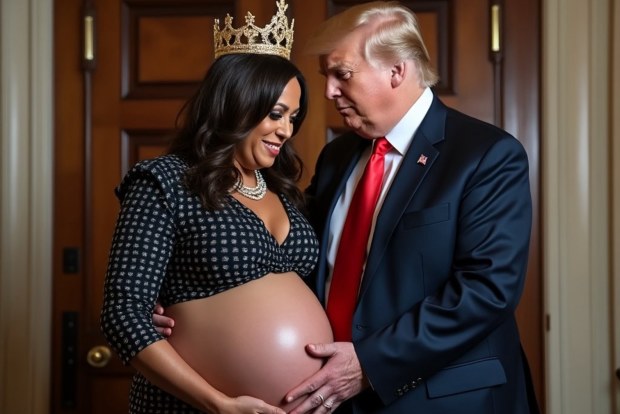
Is Harris pregnant with Trump’s baby?
Obviously not, which means voters are increasingly able to be aware that misinformation exists. And what is one to do when they don’t know? Submitting to being passive being within their community is the easiest answer that most people know.
So what’s the solution?
Simply, whoever is seeking a solution probably already knows what it is. To spread the word.
Yes, just like water plants filter the flowing waters we drink, we too must sift through Groks, confusing debates, and every other propagandous media to decide for ourselves what’s true and what’s not. Maybe, and just maybe, it might allow voters to make up their mind and cast their critical ballot in this next election.
Figuring out what you believe is hard. Knowing what’s real is hard. So maybe young voters still won’t try, but my hope is that some will. The knowledge that young voters do have the power to discover new information and decide what’s real can be empowering. Hopefully.
Hopefully.


 The Golden Thread
Leave a reply to Samantha Berg Cancel reply