

Lately, President Trump’s plans to get rid of the Department of Education have sparked many debates. Headlines on just about every news website are discussing what this could potentially mean for us. The Department of Education (DOE) is a federal agency that oversees school guidelines, funds schools, handles student loans, and enforces laws regarding access to education. It plays a pivotal role in our country’s education, so in this blog, I want to explore what dismantling the Education Department really means for us and how it can change things for students, educators, and schools as a whole.
What does he hope to achieve by doing this?
Before I discuss how this event could impact schools, I’d like to explore Trump’s reasoning behind dismantling it. Trump argues that federal control over education hasn’t been effective, so we should give states more authority. The DOE has also been accused of wasting taxpayer money and not improving student performance, even with the millions of dollars invested in it. His order directs the Secretary of Education to begin shutting down the department, and it suggests that the federal government shouldn’t handle student loans anymore.
Why do many oppose this order?
Many are concerned that without the DOE implementing standards and guidelines for schools to follow, state governments could mismanage their funds. There’s a risk that some states could be pressured to put more funds toward private schools through things such as school vouchers, instead of keeping support for public schools in low-income areas. This would lead to greater educational disparities across the country.

What’s Happening Now and What Will Happen Next?
Nearly half of the Department of Education’s workforce has been cut since Trump took office, mostly through layoffs and voluntary buyouts. The Office for Civil Rights (OCR), which protects students from discrimination based on religion, race, and disabilities, is having seven of its twelve regional offices closed by the Trump administration, and nearly half of its staff was laid off. Many employees in this office are concerned that the cuts will reduce their ability to handle and investigate discrimination cases properly.
In the short term, students and teachers might not experience any major changes, but the future outcome of this decision depends on how the Education Secretary, Linda McMahon, reallocates the department’s responsibilities to the states. The Department of Education has $1.8 trillion in student loan debt, and 40% of loans are overdue. Trump announced that the Small Business Administration will take over the loan portfolio, but that the DOE will handle some student loans and grants for at-risk students for now. It’s important to note that local school curriculum won’t be directly impacted. However, delays in financial aid distribution might happen, and it could become more challenging to ensure equal educational opportunities.
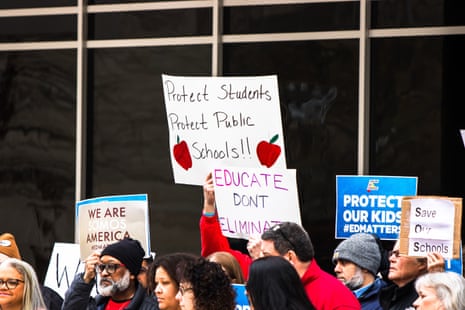
In conclusion, the effects of President Trump’s executive order to dismantle the Education Department have many possible outcomes that can significantly affect school systems, but the full results will take time to see. Supporters of his decision think that it will rightfully give states more control, but many are concerned that it will hurt students relying on federal support. Since Trump can’t fully dismantle it without Congress’s approval, its success depends on how states manage the new roles they would receive.


Leave a comment