

While it may still be difficult to pin down exactly what makes art art as artists continue to push the limits of creation, most people seem to agree that art is meant to be a form of expression and communication. Oftentimes, art serves as a way to share one’s own unique experience of the world by allowing the artist to put their feelings into forms tangible by others. Whether this be through writing, visual arts, music, or many more, each person’s unique view of the world allows them to create art that is impactful and vibrant.
When an artist has an especially distinctive way of seeing the world, they might be able to produce works that create new connections and ideas, even forge new paths and become trailblazers in their respective fields. Certain conditions can cause a person’s experience of the senses to be much different than the usual, one of which being synesthesia. Synesthesia is a condition where a stimulus, such as sound, color, or a symbol triggers another, unrelated sense. The most common forms of synesthesia include sound-color synesthesia, or chromesthesia, where the person will see or associate colors in response to sounds, and grapheme-color synesthesia, where letters and numbers are associated with colors and even manifest themselves in their perceived colors when written in another color. Synesthetes, or people with synesthesia have a higher rate of involvement in the arts, as shown in a study by Katrin Lunke and Beat Meier. These connections between sense that would otherwise be separate may open the possibilities in creation and expression for synesthetes, allowing them to be successful and influential in this field. There are many examples of well-respected and influential synesthetic artists who used their unique perception to introduce new ideas, demonstrating the great influence synesthesia has had in the arts.
Synesthesia in Visual Arts
There are many famous examples of synesthetes in the visual arts, but one of the more surprising examples might be Van Gogh. Known for his vivid style and palette, he laid the grounds for Expressionism in years after his death. His art is now highly respected, admired, and imitated worldwide as one of the most famous artists in history. His ability to express emotion through intense colors helped him stand apart from the rest. What is lesser known about him, however, is that he was likely a synesthete. In a letter to his brother, he writes this:
Some artists have a nervous hand at drawing, which gives their technique something of the sound peculiar to a violin, for instance, Lemud, Daumier, Lançon – others, for example, Gavarni and Bodmer, remind one more of piano playing. Do you feel this too? – Millet is perhaps a stately organ.
His connection of art style to different musical instruments is very likely an example of technique-timbre synesthesia, a specific form of visual-auditory synesthesia, where visuals trigger sound. While it might not be extremely evident in his art that he made these connections with sounds and might be argued that there was little influence, I believe that synesthesia is such an integral parts of a synesthete’s experience that it permeates their views and expression, even if only in subtle ways. Alyn Carlson, a visual artist with synesthesia, says this in an interview on how synesthesia is central in her art and experience in response to a question about what the loss of synesthesia would look like:
I don’t know. I probably wouldn’t be obviously doing what I do, making what I make. I’d be lost. I would be really lost, I think.
To those with synesthesia, it is not an added feature but a fact of life, and a key part of their senses, especially if they have never lived without it. Van Gogh’s synesthesia allowed him to experience art in a way different from others, and would have also affected how his creations.
Another well-known visual artist whose synesthetic influence was more obvious is Wassily Kadinsky, a Russian painter who is considered an early pioneer of abstract art. His chromesthesia (color-sound synesthesia) is well-documented through his writings and interviews.
The sound of colors is so definite that it would be hard to find anyone who would express bright yellow with bass notes or dark lake with treble.
-Wassily Kadinsky
As he heard sound, he saw color, and as he painted, he heard sound. This led him to experiment with this relationship through works such as “The Yellow Sound,” a theatre piece that incorporated color, music, and movement together through innovative techniques in lighting and visual effects. This later led to the rest of the “Four-tone Dramas,” namely “The Green Sound,” “Black and White,” and “Violet.” These productions were greatly influential in bringing synesthesia to light as well as helping to communicate the blend of senses to the audience.

Synesthesia in Music
One of the most famous examples of composers with synesthesia is Jean Sibelius, regarded as the greatest composer of his country Finland. He is well-known for his symphonies and concertos which are still widely played today. He was known to have chromesthesia (sound-color), and saw distinct colors in response to key signatures. One of the most famous examples of this was his iconic green fire place, which he had made in that color because he associated it with F major.
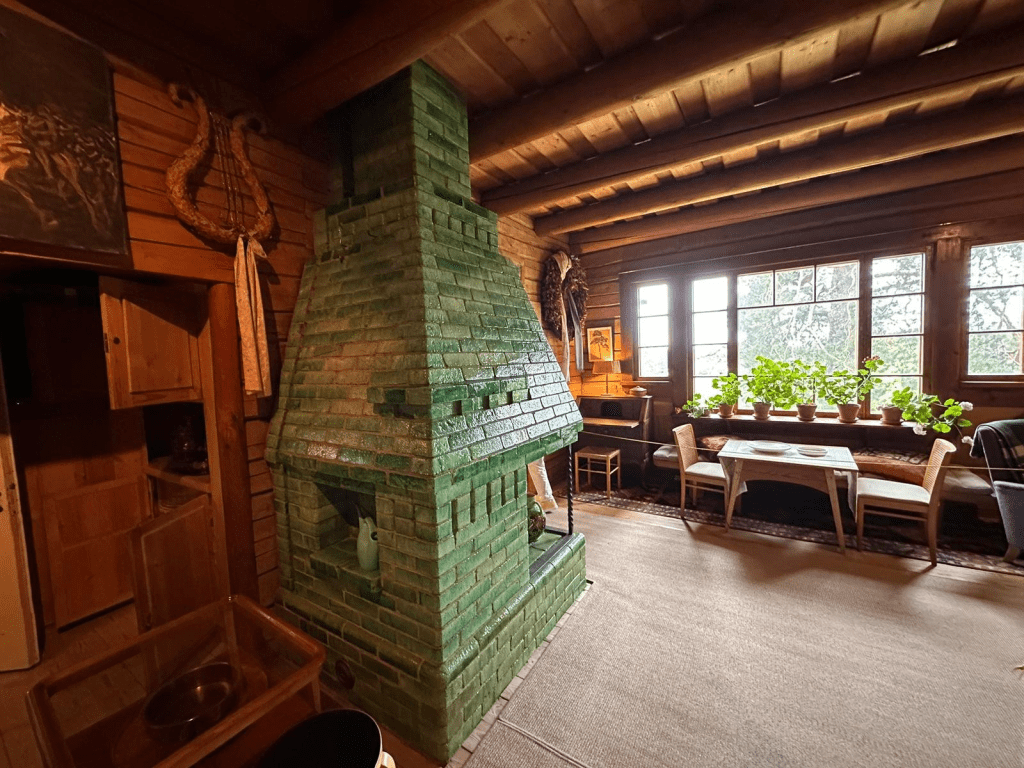
His chromesthesia was greatly influential in his work; it served as inspiration and helped him structure his complex symphonies. He described his condition as a gift which gave him the pieces to create, calling it “God’s Mosaic.” Without his ability to associate sound and color, he might not have been able to write the iconic and complex works that shaped his career and the music world.
Another iconic and influential musician and composer with synesthesia was Duke Ellington, a pioneer in jazz composition, known for creating intricate blends that created a cohesive sound throughout the band. He also had chromesthesia, associating colors with sounds, as written in the Cambridge Companion to Duke Ellington. Here, he refers to his band as his palette, and his performances and conducting are described to have had an artistic flair visually, as it seemed that each show was a unique and vibrant experience for him. His influence in the Jazz genre is huge, with many pieces still being played today, and his synesthesia which gave him inspiration and joy in music, would have been a great part in that.
Synesthesia in Literature
Unlike visual arts and music, where chromesthesia or auditory-visual synesthesia is very common since those are the applied senses, synesthetes in literature often had grapheme-color synesthesia, when symbols such as letters and words trigger colors. This type of association can allow the author to create rich and vibrant descriptions through unconventional connections.
Virginia Woolf, an author and feminist icon, is known for her experimental novels and essays. Her synesthesia was often incorporated in her writing to create connections that the readers might not have in order to share her views. An example of a synesthetic reference in her writing comes from her novel, “The Waves.”
“‘Those are white words,’ said Susan, ‘like stones one picks up by the seashore.’”
“‘Those are yellow words, those are fiery words,’ said Jinny.”
These word-color comparisons feel like a novel way of creating a picture or sensation in the mind through otherwise unrelated concepts.
This vividness in writing due to synesthesia also applies to author Vladimir Nabokov, whose synesthesia made him see each letter as a different color. To him, V was quartz pink, while N was grayish-yellowish. Letters also looked different in other languages. This vibrancy through which he would have seen words and writing would have influenced his own works, which are known for being lush, evocative, and brilliant.
“’Why do you speak of words, When all we want is knowledge nicely browned?’ Because all hangs together – shape and sound, heather and honey, vessel and content. Not only rainbows – every line is bent, and skulls and seeds and all good words are round, like Russian verse, like our colossal vowels.” -An Evening of Russian Poetry
He wrote about the interconnectedness of things, making bold comparisons to create pictures in the minds of the readers. His synesthesia may have played a huge role in opening his mind to the possibilities of comparison and association, and in turn, influenced his works and his readers.
Final Thoughts
Synesthesia allows for much artistic potential, since the artist can make unconventional connections that make their works unique. The wide range of synesthesia types means that many different types of art can have different branches of the condition, leading to different outcomes. Since synesthesia is not just a strange ability but an integral part of how a synesthete views the world, it permeates their works and serves to share these ideas with the world.


 The Golden Thread
Leave a reply to TerastalSpiceJNG Cancel reply