
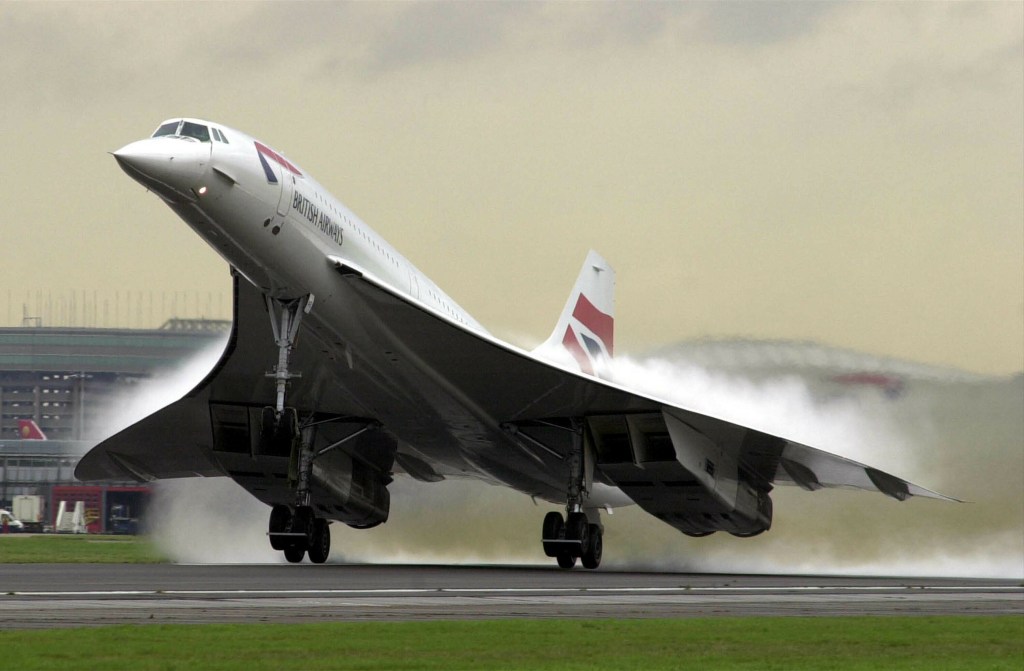
In 1979, passengers could fly from New York to London in just 3 hours, about half the time of today’s fastest flights. The only airplane capable of this, the Concorde, jointly created by the British and French was the first supersonic passenger plane. Able to reach speeds up to Mach 2, it represented a major leap in aviation technology. However, after only 30 years, the Concorde was retired in 2003. Its downfall was a result of many problems including economic challenges, environmental concerns, and safety issues.
Economic Challenges
One of the biggest economic challenge was the cost. British Airways and Air France spent $1.6 billion on making only 14 aircrafts! On top of that crazy cost, the airliners only made about $60 million. So this means British Airways and Air France were not profitable with the line of aircraft. Another economic challenge was fuel cost. The Concorde used about 5-7 times more fuel than a normal sub-sonic flight would. So this made the airliners in even more debt. On a regular flight, Concordes consumed 6,771 gallons of fuel, which quickly exceeded the profit made from the flight.
Enviormental Concerns
Another big issue with Concorde was the enviornmental concerns. The first major enviornmental problem was the loud supersonic boom. This supersonic boom would cause disruptions in overhead neighborhoods, such as rattling windows and loosening roof tiles. This led to many complaints from the communities affected by this boom. Eventually the FFA would then restrict Concorde from flying over any U.S land and any other countries. Another problem the Concorde caused to the environment was the emissions. Like I mentioned earlier, the fuel consumption was awful. This then led to pollutants such as Nitrogen Oxides being put directly into our sensitive stratosphere.
Safety Issues
The last problem was the safety issues with the planes. In the year 2000, there was a big crash that involved the Concorde. A DC-10 had taken off just moments before the Concorde, and the DC-10 let out some debris during takeoff. The Concorde ran over this debris and it blew out a tire. The flying tire fragments then ruptured the fuel tank and caused a massive fuel leak, the fuel then was lit on fire due to one of the parts in the plane being hot, causing a fire. The intense fire damaged the two left engines, causing them to malfunction and be shut down by the crew. This resulted in the aircraft losing altitude and crashing into a hotel shortly after takeoff, killing all on board and four people on the ground. This crash led to a plumbet in sales.
There were also 57 recorded tire burst incidents on the fleet before the fatal 2000 crash, with many causing damage to fuel tanks or structural components. These repeated incidents, particularly those that punctured fuel tanks, demonstrated a known vulnerability in the aircraft’s design and highlighted the potential for catastrophic damage from a single blowout. So in a nutshell, the Concorde was not the most durable plane which was one of the major safety concerns with it.
That was just a small portion of Concorde and the issues between safety, enviornmental, and economical concerns. But there are much more to come.
Refrences
Editors of Encyclopedia Briticanna, Summary, History, & Facts, Briticana, https://www.britannica.com/technology/Concorde
FAA, Air France Flight 4590, F-BTSC, Federal Aviation Administration, https://www.faa.gov/lessons_learned/transport_airplane/accidents/F-BTSC#:~:text=Based%20upon%20evidence%20gathered%20from,energy%20tire%20fragments%2C%20the%20No.


 The Golden Thread
Leave a reply to Paxton Cancel reply