
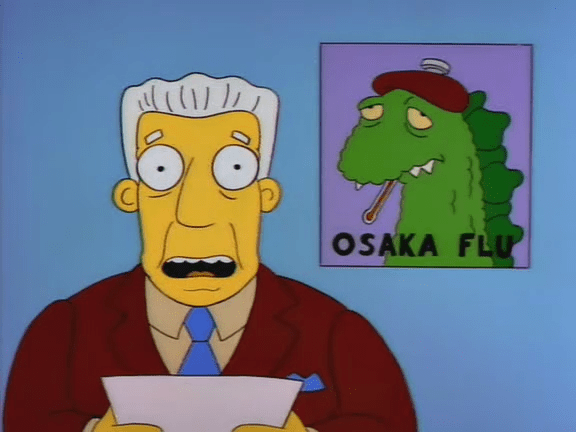
When The Simpsons aired “Marge in Chains” on May 6, 1993 (Season 4, Episode 21), no one thought it would later be linked to real-world events. Written by Bill Oakley and Josh Weinstein, the episode opens with the “Osaka Flu” — a virus that spreads to Springfield after an overseas factory worker coughs into packages of juicers. Soon, the whole town is sick except Marge, who ends up overworked caring for her family. Exhausted, she accidentally forgets to pay for a bottle of bourbon, gets arrested for shoplifting, and is sent to jail. Without her, Springfield falls apart — the house becomes chaotic, a town bake sale fails, and public outrage grows until the mayor frees her early.
Though meant as satire, fans later claimed the episode predicted the COVID-19 pandemic: an imported flu, panic, misinformation, and even a “killer bees” scene that echoed real-life headlines. In reality, the writers said it was just coincidence — a parody of global trade and media hysteria, not prophecy.
The episode works because it’s classic Simpsons: sharp social humor mixed with absurdity. It highlights how communities unravel in crisis, how invisible Marge’s care work usually is, and how quickly public judgment can turn cruel. Decades later, its humor still hits, and its “prediction” status keeps it one of the most talked-about Simpsons stories ever.


 The Golden Thread
Leave a reply to Ms. Hibbard Cancel reply