
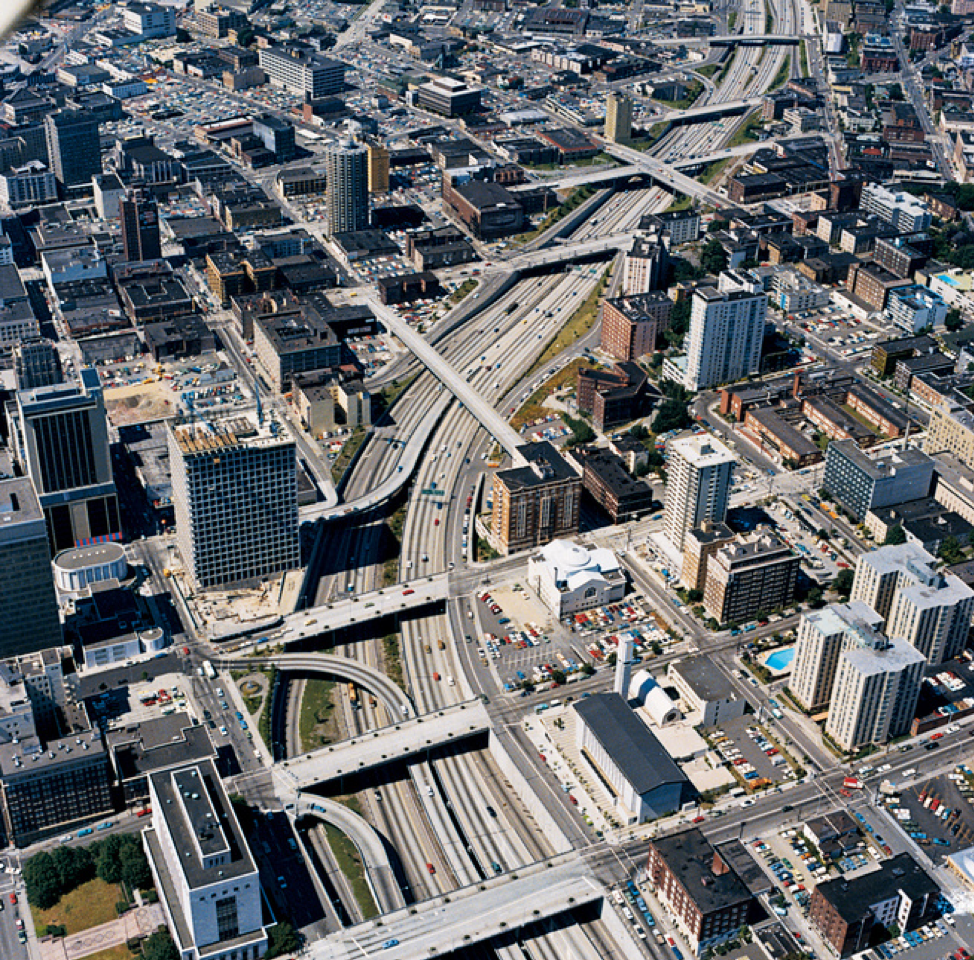
Houston, Atlanta, San Jose, Los Angeles, and just about any city in America. What do they all have in common? Poor urban design. In many American cities, owning a car is less of a choice and more of a necessity due to the major car dependency because of the distance between schools, food, workplaces, etc. Even if an individual cannot drive some streets have dangerous intersections, missing sidewalks, or high speed traffic. A city should not require people risking their safety to simply walk to a nearby store. Not only are these cities unsafe for pedestrians, they also just don’t look visibly appealing compared to other countries in the world because of the urban sprawl. Too often, valuable urban land is used for storing cars instead of creating places where people can live, gather, or connect.
However, I didn’t always pay this close attention to urban design in my everyday life prior to reading the opinion of Rebecca Solnit’s Wanderlust and James Howard Kinstler’s, “The Ghastly Tragedy of the Suburbs” TEDTalk. Both works changed the way I think about walking and the environments people live in. Before, I mostly viewed walking as a way to get from one place to another. I never really thought about how much the environment around me could affect that experience. Solnit helped me understand that walking is more than just physical movement. It allows people to experience their surroundings like saying “Hey” to a friend, noticing overlooked things, and developing connections with the places they visit.
In Wanderlust, Solnit discusses the importance of walking and how it connects people to the world around them. One idea that stood out to me was, “The random, the unscreened, allows you to find what you don’t know you are looking for, and you don’t know a place until it surprises you.” (pg.2). I interpret this idea as showing that walking gives people an opportunity to experience life beyond simply reaching a destination. When we walk, we have more chances to notice our surroundings, observe other people, and discover things we might miss while driving. This made me reconsider how much we miss when we depend on cars for almost everything.
Kunstler’s argument made me question why so many American neighborhoods are designed around automobiles instead of people. During his TED Talk, he states, “The places that we have built in America are not worth caring about.” This statement stood out to me because it explains how the design of a community can affect the way people feel about the place where they live. When neighborhoods are filled with large parking lots, shopping centers, and busy roads, there are fewer opportunities for people to walk around and interact with one another. His argument made me realize that urban design is not just about how a city looks, but also about how it makes people feel.
These ideas also made me think differently about the environment in Carrollton. When visiting areas such as Adamson Square, I could see how having businesses and public spaces close together creates a different experience. People have the opportunity to walk between stores, spend time outside, and interact with others. Instead of simply driving somewhere, parking, and leaving, people can take their time and experience the area. This connects to Solnit’s ideas because walking allows us to become more aware of our surroundings. It also connects to Kunstler’s argument because places designed for people can encourage a stronger sense of community.
One thing I have started to realize is that good urban design affects more than just transportation. It affects people’s independence, safety, and opportunities to interact with one another. Someone who cannot drive should still be able to reach a grocery store, school, or workplace without depending on someone else. Children, older adults, and people with disabilities should also be able to move around their communities safely. These are things that should be considered when designing a city.
After engaging with these readings, I have started to look at cities differently. I pay more attention to sidewalks, public spaces, parking lots, and how far apart everyday destinations are. I also understand that walking can be an important part of experiencing a community rather than just a way to reach a destination. Although changing the way American cities are designed would take time, I believe communities should prioritize people instead of automobiles. Ultimately, a successful city should not just be a place where people can drive through. It should be a place where people actually want to spend time, connect with others, and feel like they belong.


Leave a Reply