
Have you ever walked through a crowded place and still felt as if you were completely alone or invisible? Cities are filled with people, yet some places do not encourage human interaction. Some public spaces invite people to stop, talk, and take in their stunning surroundings, while others seem to only be designed for people to pass through without a second thought.
This raises an important question: does the way we design our cities influence how we connect with one
another?
Imagine sitting in a park where people gather to talk, eat, and relax. Now imagine standing beside a busy road where hundreds of people pass by in vehicles without being able to interact with each other at all. Each of these spaces are public, but they foster uniquely different experiences. The difference may not be as simple as the people who occupy those spaces, but how those very spaces were designed.
The layout of public spaces in a city influences how people interact with one another because spaces designed for walking, sitting, and gathering encourage social connections, while spaces designed primarily for transportation can make people less likely to interact with their surroundings and community.
Rebecca Solnit writes about how places focused on transportation can make people not as likely to interact with their community or surroundings in her book called ‘Wanderlust’. She states, “The multiplication of technologies in the name of efficiency is actually eradicating free time by making it possible to maximize the time and place for production and minimize the unstructured travel time in between.” What I believe she meant by this is that the high efficiency of transportation highly minimizes the unrestricted time that we have in between the time that we use to be productive. In other words, we are losing our time to connect with one another, therefore leaving some of us feeling disconnected from society.
From my personal experience, I agree with Solnit’s claim. For example, many roads around some parts of Carrollton do not offer sidewalks for pedestrians to safely walk to get to different places in which some people would want to be able to walk to. For example, many neighborhoods in Carrollton lack a safe walking space for pedestrians, pushing them to drive in a car even if their destination is within walking distance. Right now, it would be unsafe for a group of people to walk in certain areas in the city, which also eliminates the possibility of people being able to connect with each other and explore their environment.
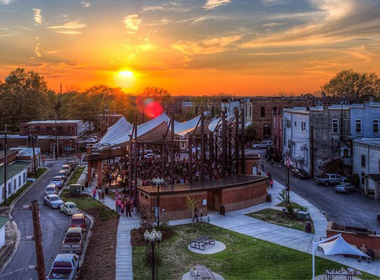
Although some places within Carrollton do not provide a place for people to walk and connect with each other safely, there is one significant example in which I’d say it does the opposite: Adamson Square. Recently, our AP language class went on a walking tour around Adamson Square in order to find different examples of urbanization within the city. The Square provides a wide area for people to safely get from one place to another. It includes sidewalks along each of the buildings and automated pedestrian crosswalks that enable safe crossing on roads.
Along with being able to walk safely, the square offers multiple amenities that encourage people to connect with each other and the community. For example, benches and tables that give people a place to sit down and socialize with one another, different shops and businesses that intrigue people within the community, an amphitheater that features captivating experiences by talented performers, and a park area which serves as a prominent hang out area for some. These attributes make the Square a phenomenal place for connections to either grow or begin.
From what I’ve learned, there are different attributes needed for a place to encourage human interactions, and without them it more than likely won’t happen. Some areas provide a safe comfortable place for people to be able to explore and some places are purely designed for transportation purposes only. All in all, the best connections are made where the place accommodates for it.


Leave a Reply