
In modern society, suburban sprawl has gained a chokehold on our communities. As technology becomes more prevalent, it has only made these concrete sprawls worse, often without us realizing it. One of the biggest problems with suburbs is their incredible inefficiency. They desperately attempt to imitate the attractions of large cities but often fall short, filling their landscapes with oversized parking lots, half-empty strip malls, and other wastes of space. These developments consume valuable land and resources that could be used to address more pressing community needs. Suburbs also rely heavily on cars, offering little to no public transportation because homes, stores, and other destinations are separated by enormous distances. Instead of bringing people together, suburban design often isolates them.
One major consequence of this inefficient use of space is the lack of communal areas where people can gather. Technology has worsened this problem by making it easier to replace physical experiences with digital alternatives. Suburban developments often depend on stores and businesses to fill their empty spaces, but what happens when people can order almost anything from Amazon? What happens when someone can stream a movie at home instead of visiting a theater? As convenience becomes the priority, businesses that once brought people together struggle to survive. This creates a cycle in which fewer public gathering places lead to greater isolation, making people even more dependent on technology and private spaces.
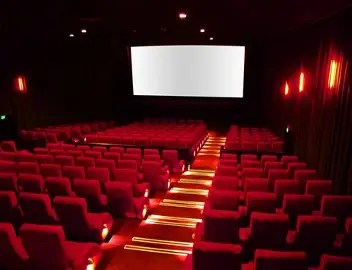
Movie theaters provide a clear example of this problem. In recent years, theaters have faced increasing pressure from major entertainment companies such as Disney and Universal. Some theaters operate under agreements that require them to show certain films, even when those movies are unlikely to attract audiences. Meanwhile, the same companies increasingly distribute movies through streaming services, giving customers another reason to stay home. For a small, privately owned suburban theater with only four screens, one unsuccessful movie can occupy a quarter of its available screens for weeks, potentially costing the business a significant portion of its income. When multiple films underperform at once, the financial consequences can be devastating. These theaters have the potential to become important community gathering places, yet they must compete with powerful corporations while operating within inefficient suburban environments that make businesses expensive to sustain.
However, movie theaters represent only one part of a much larger issue: the disappearance of third spaces. Third spaces are places outside the home and workplace where people can socialize, build relationships, and feel connected to their communities. Libraries, parks, cafes, community centers, and local theaters can all serve this purpose. Unlike homes, which are private, or workplaces and schools, which often come with specific responsibilities, third spaces allow people to interact without necessarily having a particular goal. They create opportunities for spontaneous conversations, shared experiences, and friendships between people who might otherwise never meet.
Unfortunately, suburban design and corporate interests often work against these spaces. Businesses must prioritize profits to survive, while large corporations have the resources to outcompete smaller local establishments. At the same time, car-dependent neighborhoods make it difficult to visit places without planning a trip and arranging transportation. When people can access entertainment and shopping from their phones, the incentive to leave home becomes even weaker. The result is a society where convenience increases while meaningful social interaction becomes harder to find.
Solving this problem requires more than simply building additional stores or entertainment venues. Communities need to prioritize walkable neighborhoods, reliable public transportation, public parks, and affordable gathering places that encourage people to spend time together. Local businesses and independent theaters also deserve support because they contribute more than economic value; they help give communities their identity. Technology itself is not the enemy, but it becomes a problem when it replaces nearly every reason to interact with the world around us.
Ultimately, suburban sprawl is not just an issue of wasted land or poor urban planning. It reflects a deeper problem with how society prioritizes convenience and profit over community and human connection. Movie theaters demonstrate what is at stake when local spaces struggle to survive in an environment designed around cars, corporations, and consumption. If we want stronger communities, we must create places where people have reasons to leave their homes, encounter others, and participate in shared experiences. A community should be more than a collection of houses, parking lots, and businesses. It should be a place where people can genuinely connect.


Leave a Reply