
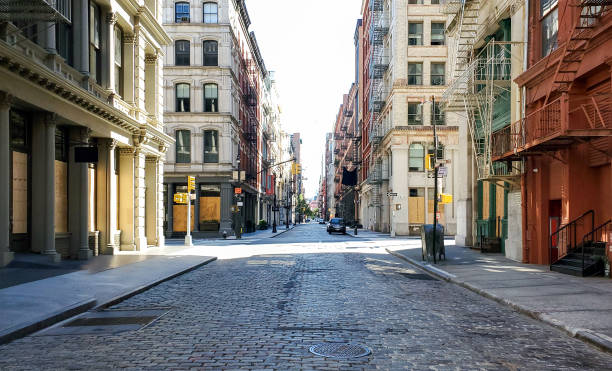
Do you ever drive through a city without ever noticing the people, social life, and vitality of the atmosphere around you? Efficient transportation is great, but sometimes technology can move people through towns and cities so fast that human interaction is gradually diminished.
Forms of efficiency such as drive-throughs, self-checkout lines, mobile orders, and traffic lights have negatively impacted the vibrant social atmospheres of cities and suburbs like Carrollton. For example, places on Adamson Square like Gallery Row offer places to sit and interact with people in your community. In contrast, places like Starbucks offer drive-throughs, which decrease human interaction and a sense of community. Not only have forms of efficiency been drastically increasing, but the public spaces in cities and suburbs are slowly being deserted.
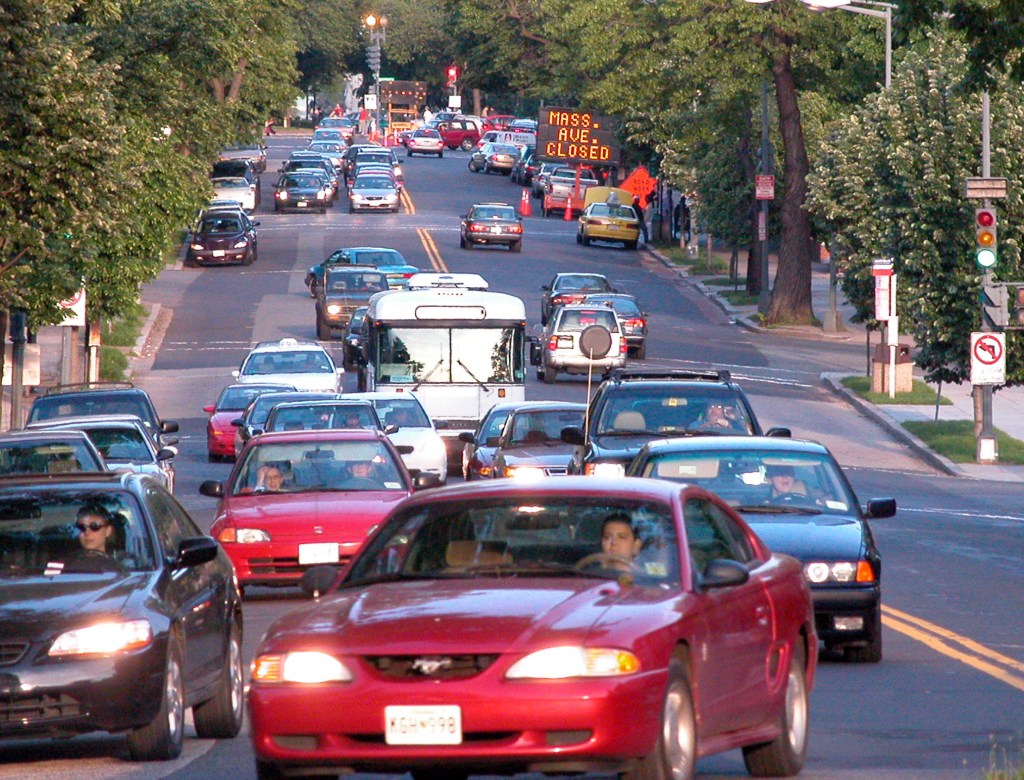
Some people may argue that these efficiencies create more free time that could be used for human interaction, but in reality this extra time is just used by people to get more done. Rebecca Solnit describes these situations when she says “The multiplication of technologies in the name of efficiency is actually eradicating free time by making it possible to maximize the time and place for production and minimize the unstructured travel time in between.” The formation of new technologies like self-checkout lines and digital ordering kiosks have gradually weakened connections between individuals in cities. Simple conversations and greetings in grocery stores and fast food restaurants are being driven away by these efficiencies, which harms the sense of a connected, lively community.
Through this connectedness and liveliness, we see communities that are able to thrive with a dependency of the people on each other. In his 99% invisible episode “U is for Urbanism,” Roman Mars argues that a functional city depends on the people operating within it. He explains, “It’s the systematic dance of neighbors, shopkeepers, kids, workers, and strangers moving through shared space, recognizing familiar faces, having spontaneous conversations, and watching out for one another. It’s the visible manifestation of a neighborhood that’s working the way it should.” Unfortunately, many urban and suburban settings today do not function like this, due to the multiplication of efficiencies. Rebecca Solnit illustrates these situations In her book “Wanderlust” when she states “public space is also being abandoned and eroded in older cities, eclipsed by technologies and services that don’t require leaving home, and shadowed by fear in many places.” Mars explains that small interactions between people can help a neighborhood function, while Solnit describes how modern technology can lead people to disregard public places, where these interactions could happen. This shows that a city’s social sphere is heavily influenced by how the space encourages people in it to interact.
Mobile ordering apps and cars are also forms of efficiency that allow people to complete tasks without human interaction or time spent in a shared public space. In her 99% invisible episode “U is for Urbanism,” Anna Kode describes her vision of a strong neighborhood, with sidewalks playing a crucial role: “You’re seeing children playing on the street, and it’s, like, the quintessential sidewalk ballet–just little moments of human interaction that are unplanned and pretty minor, but altogether they make you feel like you’re part of something greater.” She emphasizes that everyday opportunities for human interaction help create functional and connected neighborhoods.
While Kode illustrates how shared spaces encourage interaction, Solnit describes, in her book “Wanderlust”, how efficiency is the reason people fail to have these interactions. She states “The indeterminacy of a ramble, on which much may be discovered, is being replaced by the determinate shortest distance to be traversed with all possible speed, as well as by the electronic transmissions that make real travel less necessary.” Solnit’s argument shows that people’s focus on reaching their destination causes them to miss the interactions and experiences along the way.
Although different forms of efficiency can make people more productive, they should not replace human interaction in a city. A successful community is not only measured by its speed and efficiency, but by the connection and interaction between the people in it. As a result, we need cities that intentionally design spaces that encourage us to slow down and fully engage with the people around us.


Leave a Reply