
Driving around Carrollton, you probably aren’t thinking about how the roads and sidewalks you use affect your day-to-day life. You’re more likely to be thinking about where you’re going or why there’s construction on those roads. At least, that is how I used to view it. The deepest I had ever dived into urban planning and suburban sprawl was a few TikToks I’d seen about how horribly some neighborhoods have been designed and their lack of connecting roads. After reading about Jane Jacobs and listening to James Howard Kunstler, I’ve noticed some things about Carrollton that had never crossed my mind. I actually think Carrollton is doing a good job of managing projects, even if they move at the speed of the federal government.
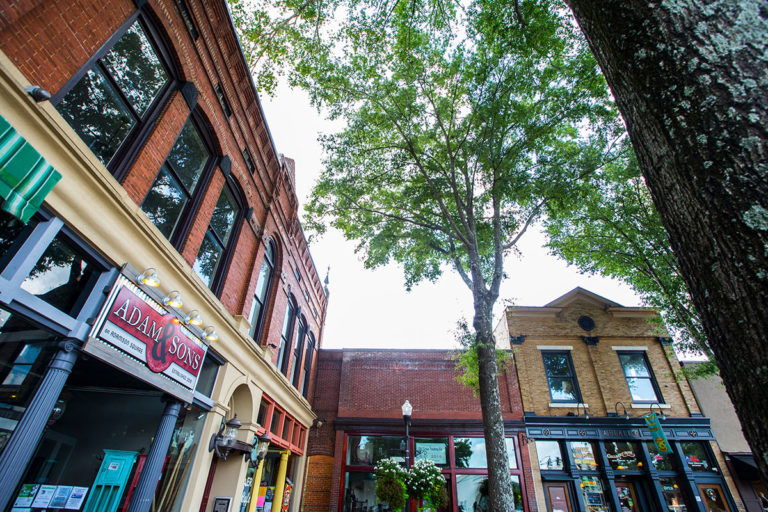
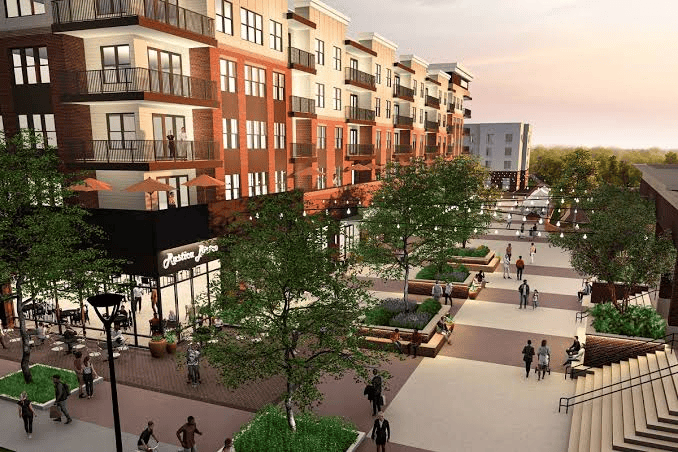
Downtown Carrollton is the best example to me. Over the past few years, the city has changed roads to make them more pedestrian-friendly, redone its signage, and improved the appearance of Adamson Square. They are building a new hotel, apartments, and shopping center that is community-focused. I’ve noticed more people walking around the square, eating, and spending time downtown because of these changes. In the 99% Invisible episode “U Is for Urbanism,” Jane Jacobs argues that we should “let the sidewalks do the job that they can do best” (qtd. in Mars). Her point is that sidewalks aren’t just meant to get people from building to building. They also serve the purpose of fostering interactions. Downtown Carrollton is an example of this. Instead of people just driving through, they actually spend time in the square.
Leaving downtown changes things. Carrollton has never-ending suburban neighborhoods where houses are identical, and trees are an afterthought. Some neighborhoods are so badly designed that a two-minute drive can easily become ten minutes because of their entrance roads. Apparently, the shortest distance between two points isn’t a straight line; it’s whatever the subdivision developers decide is best. In “The Ghastly Tragedy of the Suburbs,” James Howard Kunstler describes suburban sprawl as “the national automobile slum” (00:45). His choice of the word “slum” makes his criticism obvious, and it makes me think of slop. He sees these car-dependent developments as places that lack character and community. While I understand this, I don’t think suburbs are inherently bad. I think suburbs can foster great communities if they are designed to be walkable, with trees, connected sidewalks, and additional places for people to socialize. They could be amazing, especially since Americans love a big house.
Maple Street is another good example. The Greenbelt has greatly improved the entire city’s walkability, as there was literally nowhere to walk before it, but it has especially improved Maple Street. Maple Street still needs some work, though. Many sidewalks end awkwardly, and cars are the last thing you want to be around when walking. I don’t think getting rid of cars is realistic. America is built around driving, and that’s probably not changing soon. Cities need to make it convenient to drive somewhere while creating pedestrian areas where people can enjoy being outside.
In 2025, I had the opportunity to meet with Carrollton’s city planner through a club I’m involved in. We discussed the city’s comprehensive plan and Carrollton’s future. The amount of effort and time that went into the plan was amazing, and it is great to see this type of development being planned for our future. Improving a city takes time, especially with the government involved. All of these things have helped me understand how much American infrastructure influences our daily lives. Carrollton isn’t a bad city, and I think it’s moving in the right direction. I want to see downtown expand, and I want to see Maple Street and other roads become more walkable. I want to see more trees and walking spaces, and I hope these improvements come before we are all driving Tesla flying cars.


Leave a Reply