
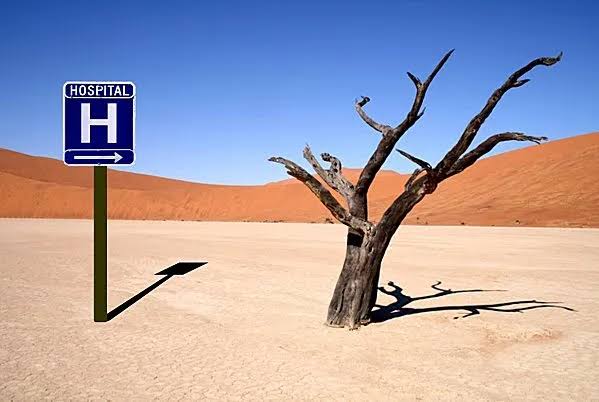
Healthcare is a service everyone needs and should have access to, but low income can get in the way. People with low income struggle to find good healthcare because they can’t afford it or live in areas that are deprived of access to healthcare. These areas are called medical deserts, geographic areas where residents have limited, delayed, or no access to basic medical services, providers, or facilities.
This is a problem that a large portion of the world faces; for example, Sierra Leone is a country in Africa that struggles with good healthcare infrastructure, preventing many from getting treatment. In Everything is Tuberculosis, author John Green mentions Henry, a Sierra Leonean boy who contracted tuberculosis. His mother, Isatu, had a hard time affording healthcare for him, and it got in the way of their schooling. She says, “Whenever I had money, I invested it in Favor and Henry’s schooling. I always paid their school fees. I knew there is no future without education. But with Henry sick, we had many constraints.” (Green 42)
Even when good healthcare starts to be provided in poor areas, many people don’t trust the healthcare system because of their experience with bad healthcare. Jacqueline Novogratz addresses this in her TED Talk, saying, “And so many low-income people have seen so many… quacks and sporadic medicines offered to them that building trust takes a lot of time” (Novogratz). This distrust slows the development of medical services in these areas, prolonging the issue.
Many people in poor communities die preventable deaths because they can’t afford proper treatment. Healthcare needs to be made more affordable in countries like the United States, because even though people can easily get to a hospital, receiving treatment can put people in debt that they can’t get out of. The prospect of having to spend large amounts of money that they don’t have pushes people away from medical centers, making their conditions worse.
Building more hospitals and reducing treatment prices is a decision that could save many lives. It would give people opportunities in life that they did not have before. It would give poor communities more of a chance to get out of poverty because their lifespans would increase.
We may not be able to afford to build an entire hospital, but there are still ways that we can help impoverished communities. We can volunteer at community health centers or help build hospitals. Some may even travel to other countries to help by building hospitals and volunteering to help provide treatment to people in foreign countries. Even if you don’t want to volunteer or travel to another country, you can still donate to aid centers to further develop them.
In summary, healthcare is a privilege that is not accessible to everyone, but is something that everyone should have. Disease and injuries should be treatable, and unnecessary death should be prevented in poor communities. If people work together to solve this issue, it can give so many more people opportunities that could advance our society.


Leave a Reply