
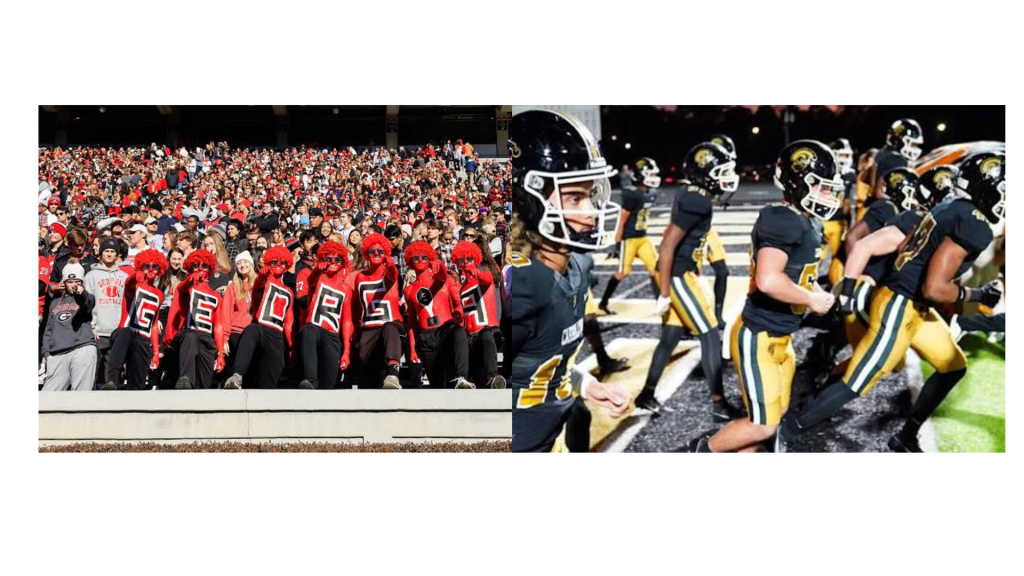
It is common knowledge that Fall Fridays and Saturdays in the southern United States are reserved for Football. Fridays, for me, are spent cheering on a team that consists of people I have grown up with, surrounded by members of a community that I have known my entire life. Saturdays, on the other hand, are spent at home or in a 93,000 seat stadium filled with strangers, cheering on the players who are the reason we are all here.
College Football fan bases span the entire country, gaining traction from many different demographics. Schools make deals with television stations where the stations pay the schools for the rights to show their games on TV. These are not the only types of deals made on campuses though.
Every year, College Football teams pay recruits to come to their school. The money in these contracts are linked to NIL, which stands for Name Image and Likeness. These deals allow college athletes to be paid for their own personal image. They can profit off of brand deals, accept money from third parties, and give themselves financial freedom that was not allowed for decades before by the NCAA. With the introduction of NIL in 2021, collegiate athletics has turned more and more into a business and begun to focus less on the traditional aspect of the sport. (https://www.ncaa.org/student-athletes/name-image-likeness/)
For years, Saturdays in college towns were dedicated to participating in traditions like Arkansas’s “Calling the Hogs” or ringing Georgia’s chapel bell after wins. While these traditions are still alive and well today, the atmosphere inside the stadiums are different. In the modern era of College football, players are transferring yearly in attempt to gain more money, and never form the true traditional alliance that comes with something like the hometown team you grew up with.
That brings us to high school football. Now, don’t get me wrong, there have been attempts to incorporate NIL into high school sports. Here in Carrollton, we watched it first hand as our local quarterback made the cover of Sports Illustrated for an issue on NIL in high schools. (https://www.si.com/college/2023/09/13/julian-lewis-nil-money-daily-cover)
But, instead of letting business integrate into the simple tradition that is high school football, the GHSA cracked down on it. High school athletes in the state of Georgia can make money from NIL, but the promise of money cannot be used to coax a player into coming to the school. Athletes also cannot be a part of any NIL collectives or use any school branding. (https://www.ghsa.net/constitution-section-2026-2027-appendix-n-guidelines-regarding-name-image-and-likeness)
High school football games, in most cases, are a place for a community to come together. The band plays the same traditional stand tunes, student sections show up, parents cheer like there is no tomorrow. Traditions, one example being the way the band spells out CHS on the field before every game, continue to bring these people together every year.
Do both stadiums, along with their respective programs, exist for the same purpose? In some ways, yes. But, as we have seen throughout the past decade, college football has shifted gears from traditional to transactional values, while high school football has made very little shifts and stayed rooted in tradition.


Leave a comment