
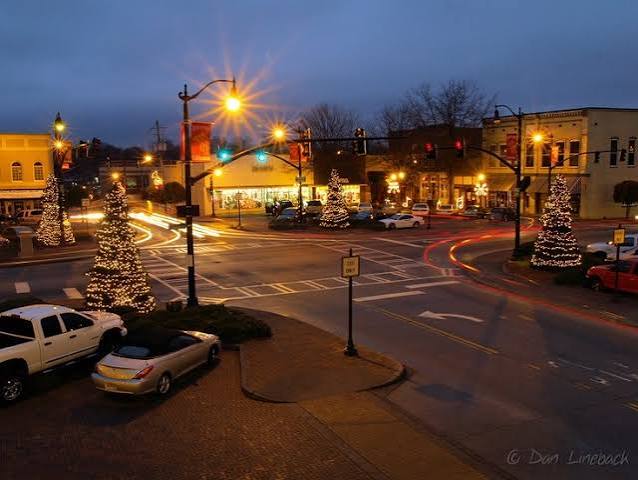
Adamson Square hasn’t really ever struck me as anything special. I mean, there are a lot of restaurants, an amphitheater, and some park areas. It’s alright. But for the longest time, I never thought a lot of good things about it. It’s crowded, and the new buildings are funky-looking. And then I realized all of that is part of the plan.
A couple of weeks ago in class, we listened to an episode of 99% Invisible, titled “U is for Urbanism.” In it, the nice podcasting man talked about Jane Jacobs, an activist who influenced urban studies, and her 4 conditions of good urbanism. The 4 are as follows: multiple functions, human density, short blocks, and aged buildings.
And then a couple of weeks after listening to that, our class took a walking tour of Adamson Square. Our job was to notice parts of the square, such as the various shops, buildings, and streets, and how they all flowed together to create one cohesive downtown. That tour was when it dawned on me. How I’ve experienced these 4 traits so many times without even knowing.
Multiple Functions
Jane Jacobs’ first condition is “Multiple functions,” meaning the area combines different uses, such as offices, retail, restaurants, and residences, so people use it for different reasons. I’ve gone to Adamson Square countless times over the years, and I’ve never really thought about how the different buildings play off each other. One winter night, my friend and I headed to Corner Cafe for dinner. It was a crowded night. A lot of people were going out for dinner. We were about to walk into the restaurant when a man said something to us. He looked about 60, with white, scruffy hair and layers of clothing given the cold weather. Very cheery-looking. I don’t remember what he said, but before we knew it, he was telling us all about his life. He explained that he lived at one of the apartments above Butter’d Udder, and how he just loves to come sit out and see people like us bring so much spirit to the square. It was a very wholesome and quick interaction, but looking back, he exemplified what “Multiple Functions” means for an urban environment. For people like me and my friend, the square was mostly just a place for social interaction and eating. But for a resident like him, the square was his front yard. Just like how someone enjoys sitting on the porch of their house, he enjoyed sitting on his own version of a porch, observing the environment of the place he called home. Two different functions of using the square, yet it brought me, my friend, and this man together.
Human Density
Jacobs’ second circumstance, “Human density,” sounds exactly as it seems – a lot of humans together. On that same trip where we met that man, we ran into another one of Jane Jacob’s conditions. Human density. Lots of it. It was already a crowded night, but I don’t think my friend and I realized to what extent it was. We walked into Corner Cafe only to be met with a 45-minute wait. Tons of people at every table. Lots of talking. That’s one thing I love about Corner Cafe. If you’ve ever been, chances are you’ve been met with the very friendly environment it has. That night, it was more exciting than ever. People were laughing endlessly while enjoying their food. It was a beautiful sight to see so many people come together to eat and have a good time. Unfortunately, my friend and I were starving, so we left and walked down to Brown Dog. Another 45-minute wait. Brown Dog is another place that has a great environment, so it all makes sense. These places that had the longest waits were the most inviting environments. That’s why so many people love coming together to enjoy them. Humans thrive off interaction, and places that invite that interaction are usually the most dense. Unfortunately for me and my friend that night, that human density caused us to just walk back to his house to eat.
Short Blocks
The third condition, known as “Short blocks,” refers to the structure of the way the streets are built. It means that streets should have plenty of corners for walkable environments, with different routes and increased interaction. I had an experience with it during the annual Christmas parade, an event on the square that I look forward to every year. Hanging out with friends, the ambience. It’s all just a good time. Last year, my friend’s cousin came since we hadn’t seen him in a while. He got dropped off outside Butter’d Udder, and we were over at the amp. He texted us, I just got dropped off. Where are y’all? We responded, Over at the amp. It was his first time on the square, so while we walked the way over by Irish Bred Pub that was much more direct to him, he took a stroll down by City Tavern and got on a completely different route to meet up with us than we were on. It was annoying at the time, but it shows the intention behind the design of the square. You can take many routes and end up at the same destination, and those routes include way different experiences. The route we took over to him was filled with tons of people wearing Santa hats, while he was on the opposite side of where the parade happened, so there were a lot fewer people. I will definitely make sure to be way more specific next time I invite someone back.
Aged Buildings
The fourth condition to the perfect urban environment is called “Aged buildings.” Despite the name just saying “aged,” it is both older buildings in the area and newer buildings in order to create contrast and balance each other out. On our tour of the square, I really spotted this contrast. Looking around the main part of the square, the buildings look much older. Obviously, some of them have been renovated over the years, but most of them keep that same brick look built around the late 19th century. I saw this when I entered Gallery Row, a coffee shop that almost reminds you of an old house with its old floors and inviting environment. Then you look at just a couple of buildings down at the Cultural Arts Center, and there’s a major shift in design. The Cultural Arts Center has windows on all sides of it, and the inside is way more minimalistic with space everywhere. When I saw this contrast, it showed me how this concept of aged buildings being put next to new buildings goes hand in hand with places having multiple functions. The design speaks heavily for the function inside the building. Of course, a coffee shop is going to feel homey, warm, and a little more crammed on the inside, while art buildings are almost always built with that minimalistic design to draw a certain type of minimalistic person. Versatility is what brings an urban environment all together, and buildings like that are adding so much to the space, creating Adamson Square as we know it.


Leave a Reply