
Why do some places make us want to walk around and explore, while others make us want to leave as soon as possible? I’ve never really thought about how the design of a place could influence my willingness to walk around or go inside of it. However, only after reading “Wanderlust” and taking the time to observe Adamson Square on my own did I realize just how much architecture really influences our perception of what is safe, and what is not. This led me to the question, “How does fear change the way that we use public spaces, and can that fear affect how we interact with the world around us?”
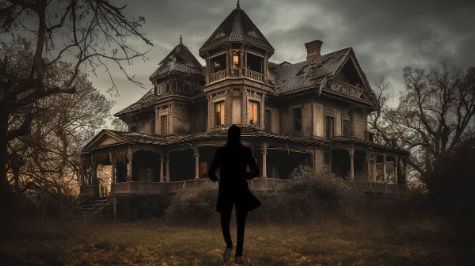
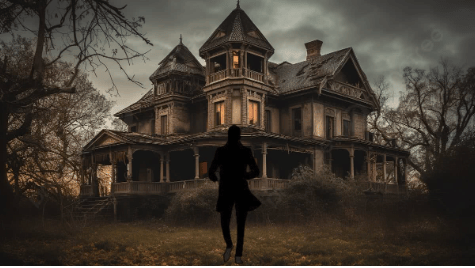
Looking at the experience that Rebecca Solnit shares in “Wanderlust,” we can see that the fear we have when walking around places is more often than not influenced by our expectations. Solnit explains, “I have been threatened and mugged on the street, long ago, but I have a thousand times more often encountered friends passing by, a sought for book in a store window, compliments and greetings from my loquacious neighbors, etc.” Solnit points out that she has very rarely had bad experiences while walking, but she usually has very good ones. This shows how the fear of one bad experience can cause us to forget the many good experiences that we have already had. Imagine if Solnit stopped walking because of that one bad experience; she would have missed so many of the good experiences she would have had in the future. I can think of a time when I forgot the good experiences I’ve had. There was a time when I was little when I avoided certain houses on halloween. I chose to avoid them because they looked scary; little did I know that those houses were the only ones that had full size candy bars. If I didn’t let the fear of how the place looked dictate my actions, then maybe my bag would’ve been a little heavier. Although the experience I had on halloween was just one example, it showed how easily fear can influence our expectations. I wanted to see if that same idea applied to public spaces. So I decided to conduct my own research in Adamson Square.
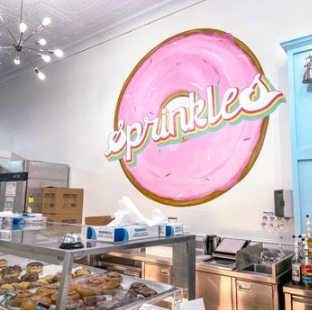
As I observed Adamson Square, I began to notice how I was immediately attracted to places using ground-level transparency and bright colors. In my previous research comparing color schemes between Onelife and Planet Fitness, I noticed that brighter color schemes made people feel more comfortable going to or staying in a certain gym. This same logic can apply to the different shops and restaurants on Adamson Square. For example, Sprinkles uses both ground level transparency and bright colors to attract its customers; therefore making the store feel more inviting. On the other hand, The Vinyl Frontier uses a darker color scheme, which gives it a sense of mystery, but at the same time, makes it less inviting to me. This shows how the appearance of a place can shape the way we feel about it before we even step inside.
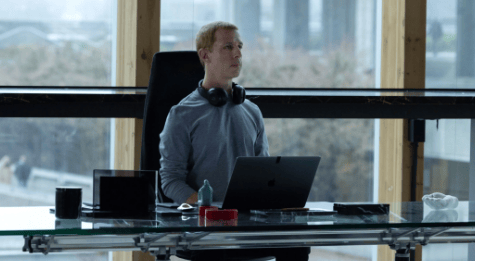
You might argue that our expectations aren’t influenced by outside opinions, and that they come from personal experiences. However, after watching “The Social Reckoning” over the weekend, I realized that social media heavily influences the way we think. The movie talks about how social media platforms like Facebook and Instagram promote violent, or hate-inducing videos to boost their own engagement. If we are constantly consuming content like this, then we start to expect it. So because of this, social media can influence the way we see public spaces before we experience them.
So how does fear change the way we use public spaces? It influences us to avoid certain places before we can even experience them, whether its because of their appearance or what we expect. As Solnit represents, fear can sometimes prevent us from experiencing all of the good things that the world has to offer. So the next time you go for a walk, or enter a city, ask yourself this: “Am I judging this place based off of what I see, or what I expect?”


Leave a Reply